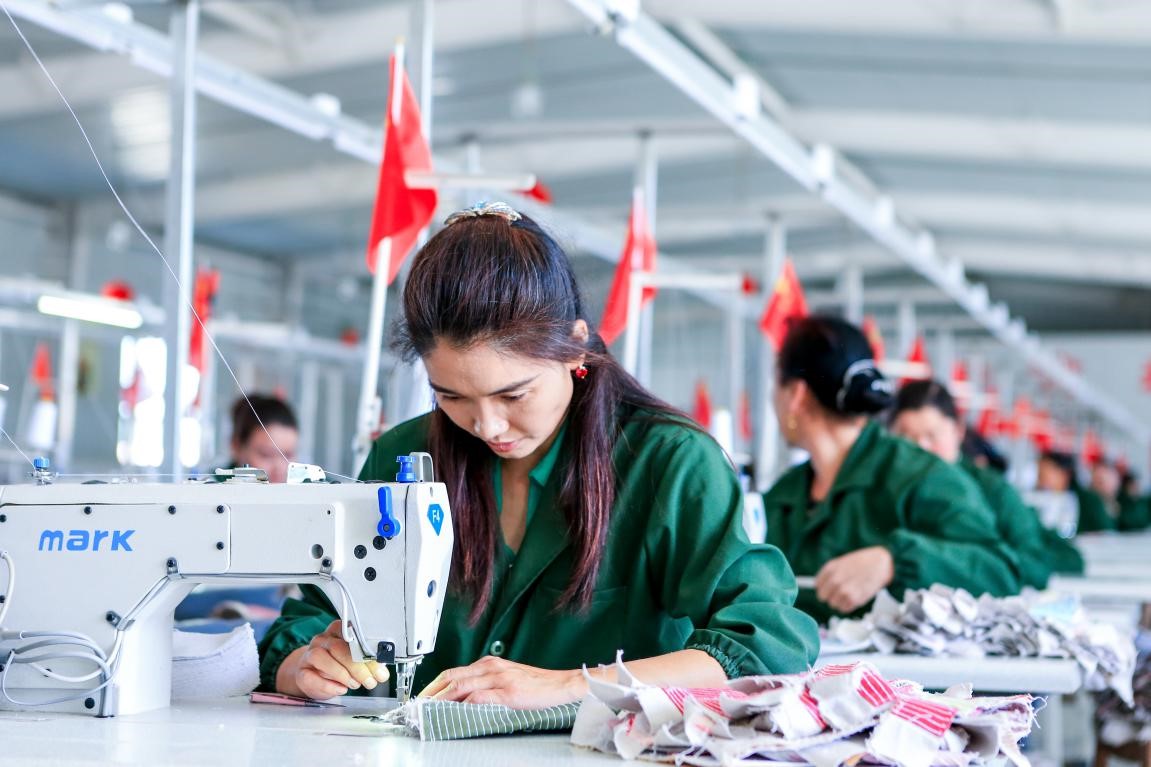
Dear Level 3 Clothing Production
Welcome to this course for Clothing Production level 3. Please go through every Unit standards provided for you together with the documents and links you are going to equip your knowledge and skills.
RATIONALE
This training programme is intended to provide a course in Clothing Production which fosters the development of both manual and intellectual skills? It describes what skills and knowledge a trainee will possess upon completion of the curriculum. The training programme provides guidelines with regards to training and assessment approaches. The programme also outlines the time required for training per module, instructional strategies and the resources required to achieve the learning objectives.
AIMS
The prime objectives of this training programme are to:
- Develop awareness of health and safety practices and code of conduct in a clothing production environment.
- Demonstrate basic skills of clothing production
- Appreciate the significance of clothing production.
TRAINING APPROACH
The approach to training is based on the paradigm of Competency Based Education and Training (CBET) which fosters trainee - centred training. The teaching and learning process is trainee – centred with the trainer providing meaningful, realistic contexts, activities and effective instruction. The emphasis is on what trainees are able to do and say as a result of effective instruction. Trainees assume responsibility of their learning. Trainees work on one competency at a time and move to the next when competent in the first one hence they learn at their own pace. Methods of instruction involve mastery learning – trainees can master the required knowledge and skills provided sufficient time and appropriate training methods used. Cooperative and collaborative training should be encouraged to maximize achievement of competencies. An effective trainer employs flexible instructional strategies that recognise and accommodate individual differences and uses a variety of support materials.
TRAINING AND LEARNING RESOURCES
Training and learning resources may include but not limited to (Training manuals; models and Reference materials including websites)
- Clothing Production Level 1-4, Pearson Vocational Education Textbook
- The Motive series: (internet, textbook, title, authors, years) Pattern cutting making up, Martin M. Shoben & Janet P. Ward, 1987
- Designing Pattern, Hilary Campbell, 1980 Complete guide to sewing, Reader’s Digest (2nd Edition) Carol Natsis, 1999
- Metric pattern cutting for Women’s wear, 5th Edition, Winifred Adrich, 1976 Fashion Drawing, (2nd Edition) Ireland PJ Cambridge University Fashion Drawing, Thames B, 1985 Fascinating Art of creating patterns, Defty Alyce, 1986
- Clothing Technology from Fibre to Fashion, (7th Edition) Roland Kilgus, 2003
- Designing Patterns, Hilary Campbell
- Pattern making with stretch knit fabrics, Julie Cole
- Fashion pattern making techniques Volume 1-3, Antonio Donnanno
MODULES NOTE:
- A module is equivalent to one-unit standard
- Modules are sequenced in order of delivery The credit value relates to the amount or quantum of learning. One (1) Credit is equivalent to ten (10) notional learning hours. It is an estimation of the time it takes an average trainee to achieve the performance requirements of a unit standard. Notional learning time should include all relevant learning activities that contribute to the attainment of the outcomes of learning viz direct contact time (Directed Learning); self- directed learning (time spent in studying, doing assignments and undertaking practical activities) and time spent in assessment.
- Trainer: Alina Serrao